Naught For Your Comfort
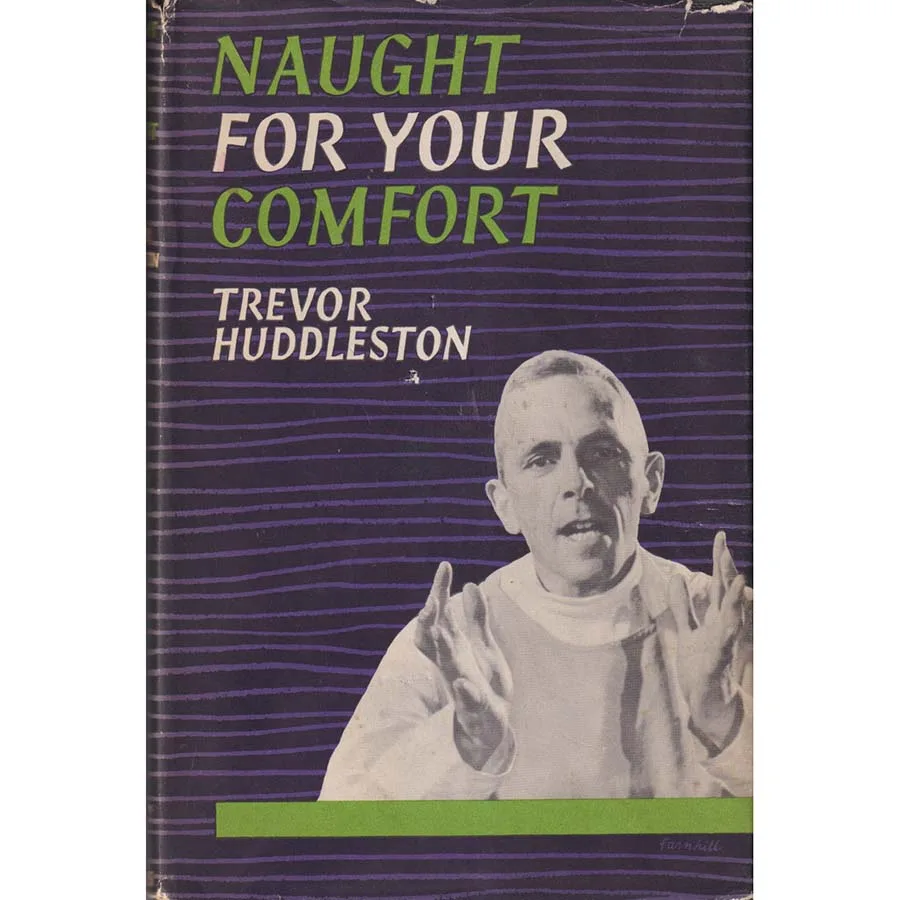
Publisher: Collins
Format: Hardback
ISBN: none
There are books designed to entertain, books intended to educate, and books written because their authors have become so thoroughly exasperated with the state of human civilisation that remaining politely silent is no longer an option. Trevor Huddleston’s Naught for Your Comfort belongs emphatically to the third category, and its title provides a fairly reliable indication that nobody should expect an agreeable account of everyone behaving splendidly.
Published by Collins in 1956, Naught for Your Comfort is a passionate, courageous and deeply disturbing examination of apartheid South Africa, written by an Anglican priest who witnessed the machinery of racial oppression at close quarters and decided that Christianity ought to involve something more substantial than delivering sermons while pretending not to notice.
Huddleston spent years working among the black communities of Johannesburg, particularly in Sophiatown, where he encountered the daily realities of segregation, poverty, discrimination and the increasingly ruthless policies of the South African government. The authorities, having constructed an elaborate system for denying fundamental rights to the majority of the population, were understandably irritated by anyone suggesting that the arrangement might be morally objectionable.
Unfortunately for them, Huddleston was not especially interested in being agreeable.
His account exposes the cruelty and absurdity of apartheid, from the indignities of everyday racial restrictions to the forced removal of communities and the systematic denial of political and social freedoms. He writes with the conviction of a man who believed that injustice remained injustice regardless of how many parliamentary acts were passed to make it perfectly legal.
Part personal testimony, part political indictment and part moral appeal, the book captures a society attempting to preserve an indefensible racial hierarchy through bureaucracy, intimidation and a remarkable capacity for self-justification. It is a sobering reminder that governments can devise extremely complicated administrative arrangements for doing things that ordinary decency would suggest they should never have contemplated in the first place.
Huddleston’s religious convictions are central to his argument, but his concern extends far beyond theology. He addresses questions of human dignity, freedom, responsibility and the willingness of respectable institutions to accommodate themselves to profoundly unpleasant circumstances.
Written decades before apartheid finally collapsed, the book stands as an important historical document of resistance, revealing both the conditions endured by oppressed communities and the determination of those who challenged the system.
Condition: Good. This 1956 Collins edition is a previously owned copy showing ordinary signs of age and handling, but surviving well after seven decades. A particularly appropriate survivor for a book concerned with the importance of refusing to disappear quietly.
Offered by Crappy Old Books, where we generally prefer our customers to be comfortable, although Trevor Huddleston would probably have regarded comfort as rather overrated when matters of justice were at stake.
An absorbing and historically significant work for readers interested in South Africa, apartheid, civil rights, religious activism and the uncomfortable truth that being respectable and being right are not necessarily the same thing.
No ISBN, naturally. In 1956, books still managed to make powerful statements without requiring a thirteen-digit identification number.
Keep browsing: See more Religion books Other books by Trevor Huddleston